

100% Counterfeit: Why You Can't Buy Genuine Nike and Adidas in Russia and What to Do About It
No Nike or Adidas originals: results of an independent inspection
Want to buy Nike Air Force 1, Adidas Samba or other popular lifestyle sneakers — and get the actual original, not a counterfeit in a fancy box? In Russia in 2026, that's harder than it seems.
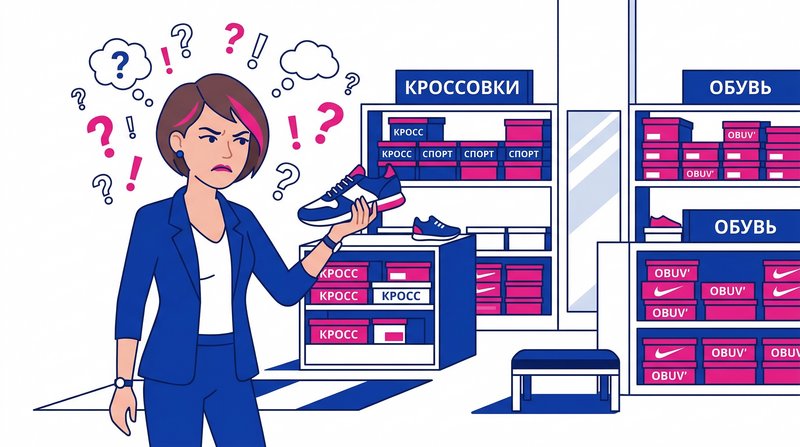
In late February 2026, the "Bureau of Forensic Examination and Evaluation" published the results of a large-scale inspection that ran from September to December 2025. Specialists purchased 1300 pairs of Nike and Adidas sneakers in shopping centers across five cities — Moscow, St. Petersburg, Kaliningrad, Sevastopol and Chelyabinsk. The price per pair: from 10,000 to 18,000 rubles — a segment where the buyer has every right to expect at least quality parallel imports.
Among all 1300 pairs tested, not a single pair of original Nike or Adidas sneakers was found. The experts worked according to the Customs Union technical regulations and GOST standards. All retail outlets claimed their goods were genuine.
As Lenta.ru reports, each pair was compared against certified samples. Alongside Nike and Adidas, Lacoste, Calvin Klein and Armani were also checked — the share of fakes among them was 26.6%, 21% and 12% respectively. Even for these brands with far less demand, the picture turned out to be alarming. For Nike and Adidas — catastrophic. The number of buyer complaints filing lawsuits against sellers over footwear quality has multiplied over the year.
What experts look at when verifying authenticity
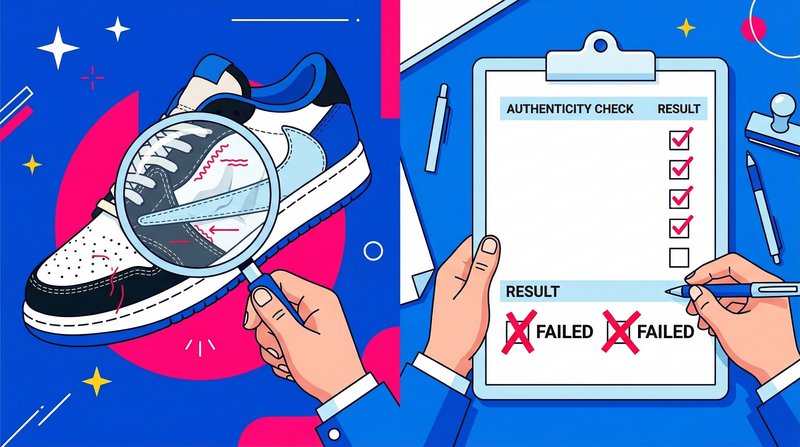
Telling counterfeits apart without specialized equipment is hard — and that's exactly what counterfeit producers count on. Still, fakes do have characteristic signs:
- Crooked or uneven last
- Uneven spacing between lace eyelets
- Poor and uneven stitching
- Cheap materials that don't match the declared ones
- Incorrect or missing labeling
- A sharp chemical smell
Notably, all of the listed defects appeared in every city tested — from Moscow to Kaliningrad and Sevastopol. These aren't isolated cases of dishonest sellers, but a systemic picture of the market.
Marketplaces: even more fakes, even less control
If the situation is bad in offline retail, on the major Russian marketplaces it's worse. The platforms operate on an open marketplace model: any seller can list anything, and oversight is essentially after the fact. A seller blocked for counterfeiting today registers a new account tomorrow and goes right back to trading.
The real cross-section of buyer experience is clearly visible in reviews. Under listings tagged "original," "parallel import," "100% authenticity," buyers write the same things: "The sole came unglued in three weeks," "The logo is crooked, the material reeks," "I compared it with a pair bought abroad — the difference is obvious."
The most alarming part isn't the existence of fakes themselves, but the level of execution. 84.1% of the counterfeits identified had intact packaging and "Chestny Znak" QR codes. More than half of the fakes differed in price from official websites by less than 40%. Neither the product description nor the price tag lets you reliably judge authenticity.
According to Brandmonitor commercial director Kirill Kirillov, quoted by The Moscow Times, the situation with athletic footwear counterfeits is "critically bad": blocking individual listings is ineffective, sellers immediately create new ones. Marketplaces themselves aren't always interested in tightening control — counterfeit sellers provide them with turnover.
Poizon — a reliable guarantee? Looking at the scandals
Authenticity issues aren't just a Russian story. Poizon itself (the reseller operates in China under the name Dewu) has repeatedly been at the center of scandals. The platform has received more than 161,000 complaints — mainly about counterfeits, authentication errors, and poor service.
The China Consumers Association publicly named Poizon among platforms with high levels of fakes. The hashtag "Poizon sells fakes" racked up 160 million views on Weibo. Bloggers ran experiments: they sent obviously fake sneakers in to be sold — and they passed authentication without any issues. Fontanka.ru writes about this.
Neither a "seal," nor a "certificate," nor a marketplace with a verification feature provides a real guarantee of authenticity. The only guarantee is buying directly from an official retailer.
How counterfeits end up on store shelves
In summer 2025, Roskachestvo head Maksim Protasov acknowledged that the Russian market is overrun with counterfeit footwear: the share of counterfeits in retail is 25–30%. According to Izvestia data cited by azh.kz, fakes are imported with minimal customs duties and legalized as products of Russian manufacturers.
The scheme involves fictitious factories near Moscow's "Sadovod" market, the purchase of "Chestny Znak" codes for 3–15 rubles apiece, and sale through marketplaces with original-product labeling at market prices. That's exactly why the presence of a QR code and a decent price are not signs of authenticity.
640,000 pairs at once: the largest counterfeiting case
As RBC reported, two criminal cases were opened in the Interior Ministry's investigative department. After a small batch was seized for examination, the rest of the goods vanished without a trace. Lenta.ru clarified that the seized items included sneakers from all of the most in-demand brands.
International manufacturers are responding through the courts: according to ECOMHUB.ru, New Balance filed more than 670 lawsuits in 2023–2024, Puma — over 1,000 lawsuits since 2023, Under Armour — over 300 lawsuits. However, counterfeit sellers quickly register new legal entities and continue operating.
The sneaker market in Russia keeps degrading
According to The Moscow Times, against the backdrop of rising counterfeits, Russian fashion retail continues to shrink: in 2025, more than 20 brands closed their offline stores, and 320 stores closed in shopping centers. The share of vacant space in shopping centers grew from 5% to 6.2% by the end of 2025.
The platform economy law, taking effect on October 1, 2026, provides for more thorough vetting of sellers — but quick changes shouldn't be expected. For those who want to wear genuine Nike or Adidas, not a fake that will fall apart at the seams in a month, Russian retail today offers no reliable solution.
How to buy original sneakers: ordering from the US via Pochtoy.com
The only way to actually get original sneakers is to order directly from a US online store. That's where, on the official sites of Nike.com, Adidas.com, at Foot Locker, Zappos and hundreds of other outlets, you'll find footwear made by the brands themselves. No "parallel chains," no "Chestny Znak" codes for 5 rubles.
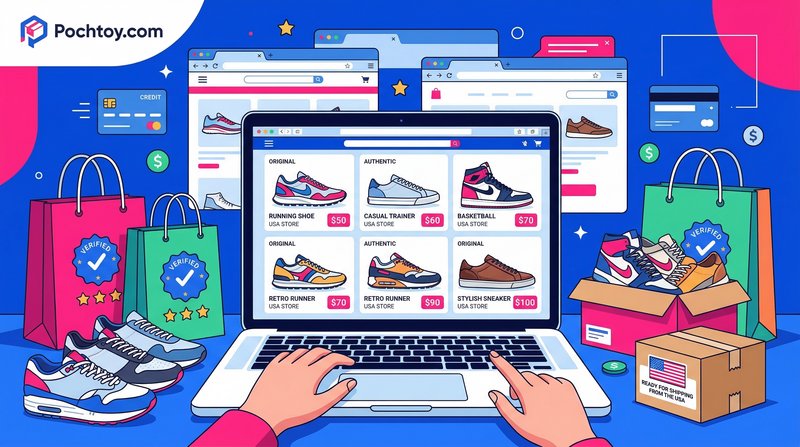
The Pochtoy.com service has been operating for 18 years and specializes in delivery from the US to Russia. Sign up on the site, get a personal address at the warehouse in the state of Delaware (no sales tax — saving another 10% off the price), order sneakers from any US store to that address, and Pochtoy.com will forward the package to Russia.
Prices in the US speak for themselves:
17.03.2026
1617 views
 Start shopping with Pochtoy.com


© 2026 Pochtoy.com LLC. All rights reserved.
510 Carroll Dr, New Castle, DE, 19720, United States
3981527 Registration number
Get notified about sales